Sumer was a historical region in the Middle East that formed the southern part of ancient Mesopotamia, between the floodplains of the rivers Euphrates and Tigris. The Sumerian civilization is considered the first and oldest civilization of the world. Although the origin of its inhabitants, the Sumerians, is uncertain, there are numerous hypotheses about its origins. The most widely accepted today argues that it would have happened no cultural break with the Uruk period, which would rule out external factors such as could be invasions or migrations from other distant lands.
The Sumerians originally practiced a polytheistic religion with anthropomorphic deities representing cosmic and terrestrial forces in their world. During the middle of the third millennium. C., Sumerian deities became more anthropocentric and were “… nature gods transformed into gods of the city.” Gods like Enki and Inanna were seen as if An, god of heaven or Enlil, supreme god of the Sumerian pantheon had assigned them the range, power and knowledge.
As a prelude to other divinities one special find:
Nammu is the Sumerian Goddess of the primordial sea, creator of all things. She gave birth to An (heaven) and Ki (earth), as well as Enki, the master shaper of the world. She instructed Enki on how to create man, and helped him to form them from clay.
 The ancient astronaut theory, also known as paleocontact hypothesis, argues that aliens have visited the planet Earth and that these beings have been responsible, in varying degrees, of the origin and development of human cultures, technologies and religions (another way to call it is alien creationism).
A common variant of the idea is that most of the deities in the religions, if not all, are actually extraterrestrials, and their technologies were taken as evidence of their divine status.
Sitchin argued that writings of the Sumerians existed that told the story of 50 Anunnaki, inhabitants of a planet called Nibiru, who came to Earth about 400.000 years ago with the intention of undermining raw materials, especially gold, for transport back to Nibiru. Because of their small number, soon got tired of his job and began to create workers for the mines by means of genetic engineering. After many tests, eventually created homo sapiens sapiens: the “Adapa” (model man) or Adam in subsequente mythology. Sitchin contended that the Anunnaki were active in human affairs until their culture was destroyed by global catastrophes caused by the abrupt end of the last ice age about 12,000 years ago. Seeing that humans survived and all they had built was destroyed, the Anunnaki left Earth after having given humans the opportunity and means to govern themselves.
 Nammu was the goddess who gave birth to Heaven and Earth, in the times of the Sumerians. The representation of this goddess is the one of a naked woman, straight, snakehead and breast-feeding a child. Their bodies are decorated with cupolas as a symbol of the underworld and magic method to ask the goddess the rebirth of what is in her womb. They also have broad shoulders, arms faced as symbol of protection. Great pubic triangle alluding to earthly paradise where life originates and resurrection.
We present here our representation of the goddess Nammu. Shaped by the painter and sculptor Angel Corral for us (which from here we appreciate his help) taking inspiration on a statuette now disappeared from the Baghdad Museum.


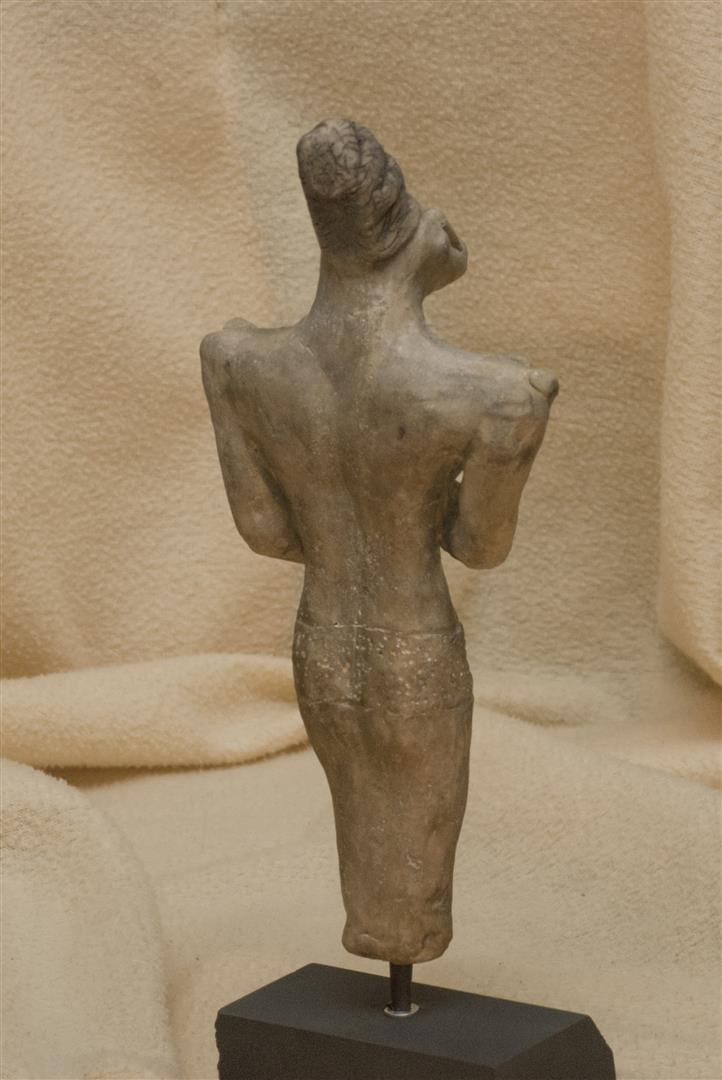
The reproductions are made of polyurethane resin loaded with crushed marble and mounted on a wooden stand. They are hand painted and aged.
Dimensions (without stand):
22 x 10 x 6 cm
With the base reaches about 30 cm high.
Weight: Approximately 550 grams
The finish is hand shaped and painte, so each one is unique and may have slight differences in color with to the photo.
They are at your disposal in our store.
References::
http://es.wikipedia.org/wiki/Religi%C3%B3n_sumeria
http://es.wikipedia.org/wiki/Antiguos_astronautas
http://www.historiaantigua.es/sumer/tradicionreligiosa/tradicionreligiosa.html
http://www.lamentiraestaahifuera.com/2010/11/24/la-diosa-nammu/
http://www.expresionbinaria.com/la-historia-secreta-de-los-sumerios/


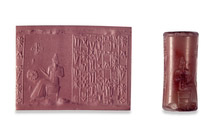
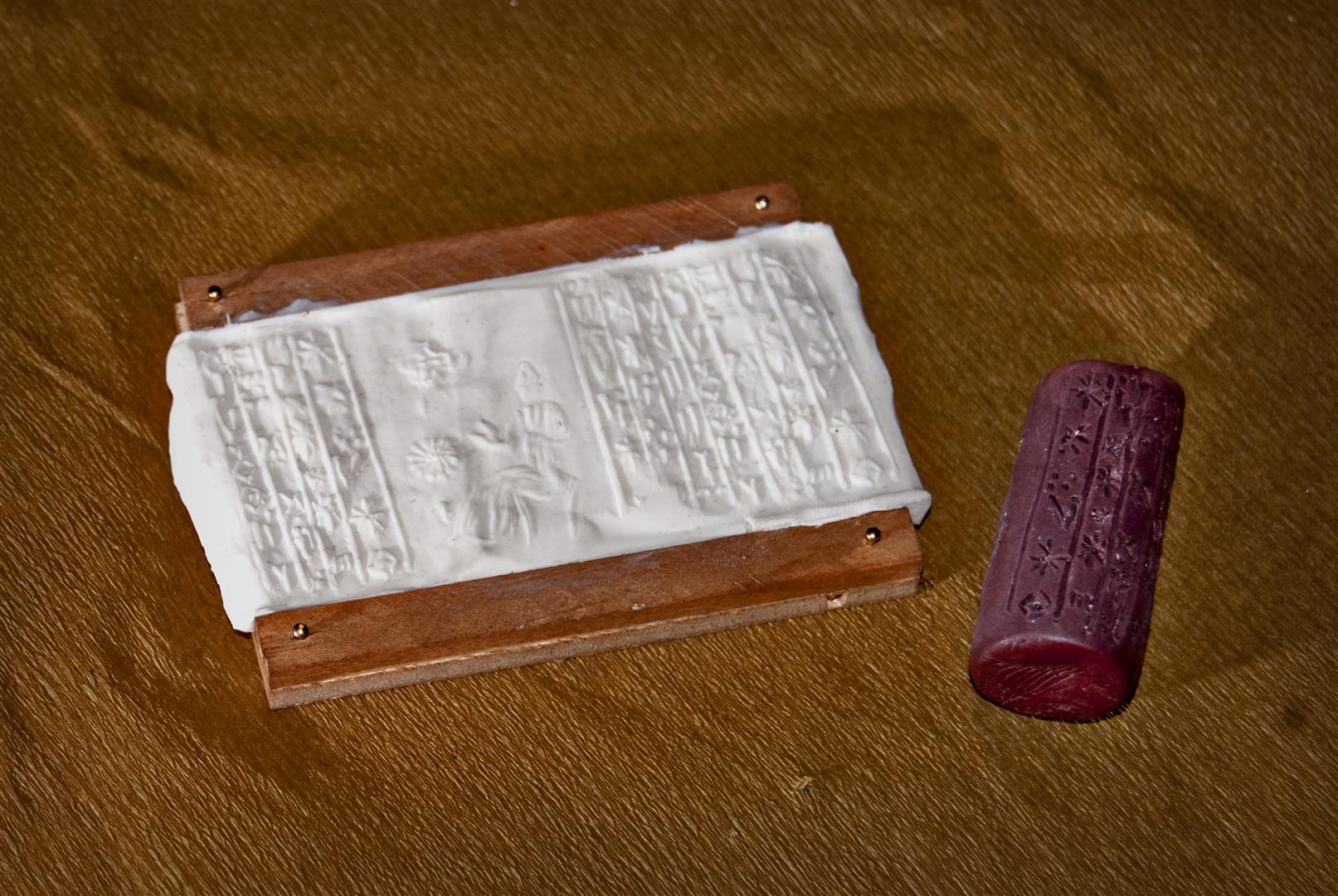
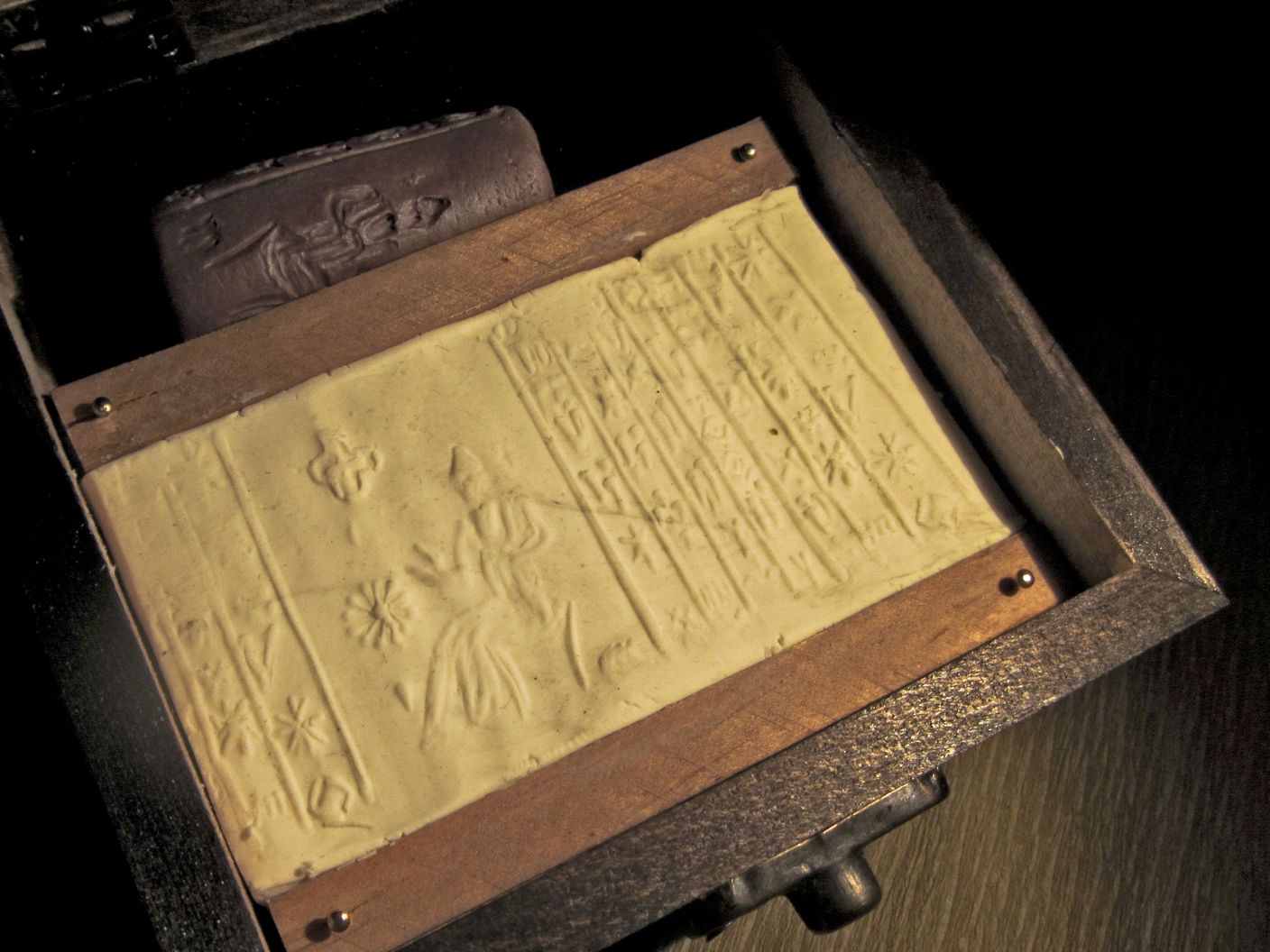
 They used to have a picture accompanied by a short text, identifying its owner, so they were used as a signature to administrative title, certificate or approval of an official.
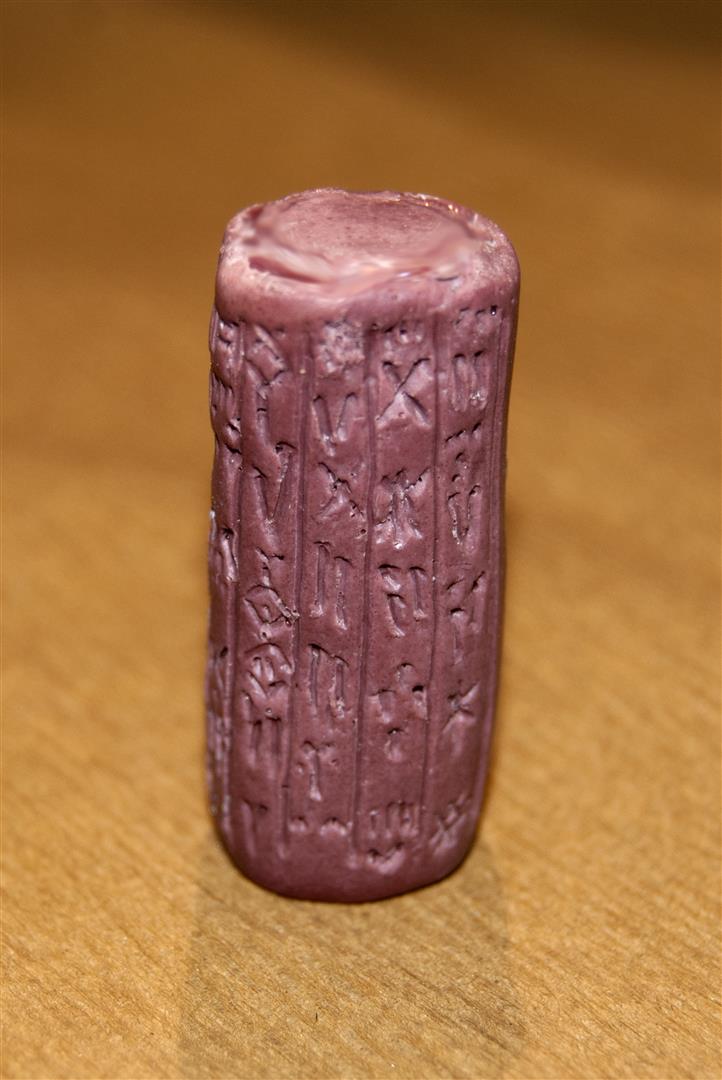 Among the merchants began to be used to identify clay pots, and later in other tablets as a record of your transactions.